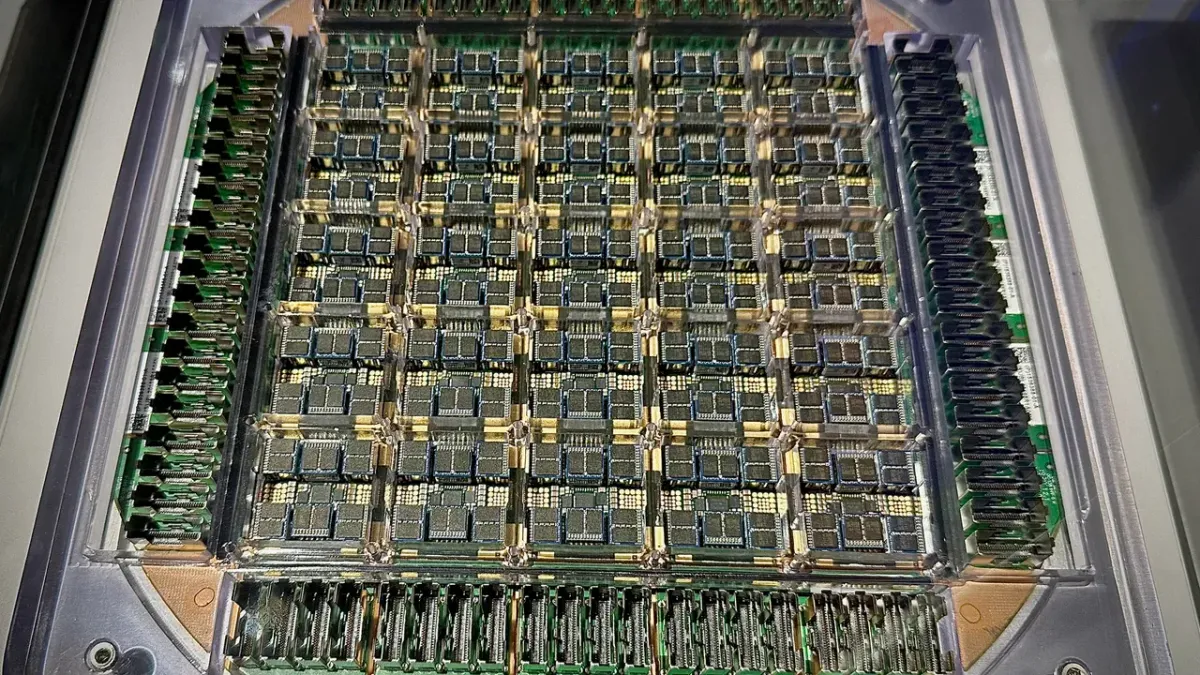
Nvidia’s high-end Blackwell B300 servers have surfaced in the Huaqiangbei electronics market in Shenzhen, China, despite strict U.S. export controls designed to keep the hardware out of the country. The availability of these chips highlights a thriving underground trade where the latest AI silicon is being sold at a massive premium to buyers willing to bypass international trade restrictions.
The cost of entry for this hardware in China is staggering. An eight-GPU Blackwell server is currently quoted at approximately $3 million in Shenzhen, with some rack units reaching as high as $3.4 million. In contrast, equivalent eight-GPU Blackwell hardware typically sells for between $500,000 and $600,000 in the United States. This represents a 5x to 6x markup over U.S. market rates, reflecting the extreme difficulty and risk associated with smuggling the hardware past customs.
A Global Network of Shadow Buyers
The supply chain for these illicit chips appears to flow through regional hubs. One seller, identified as Wu, noted that his inventory of Nvidia cards arrives via Hong Kong. The customer base is equally international; seller Jason Cheng reported that his clients include individuals from Russia and Iran—both nations currently covered by U.S. AI trade export controls. Furthermore, Chinese public institution procurement records reportedly indicate that state-linked entities are still placing purchase orders for these export-controlled goods.
The Scaling Challenge
While the presence of B300 chips in Shenzhen proves that the U.S. blockade is not airtight, the sheer cost and scarcity of the hardware remain significant barriers. Training a frontier-level AI model requires thousands of B300 chips, a scale that is difficult to achieve through piecemeal market acquisitions at $3 million per server. Nvidia CEO Jensen Huang has expressed a desire to get more advanced chips into the Chinese market legally, but for now, the region's AI ambitions remain tethered to a high-priced black market.